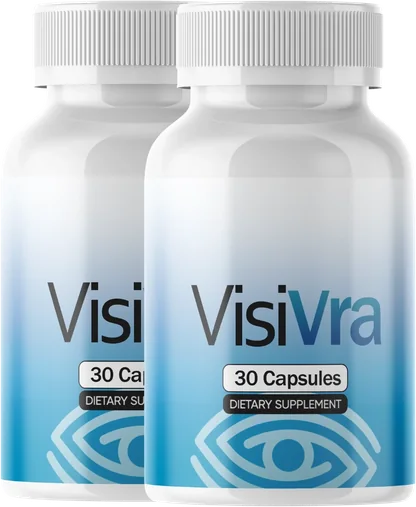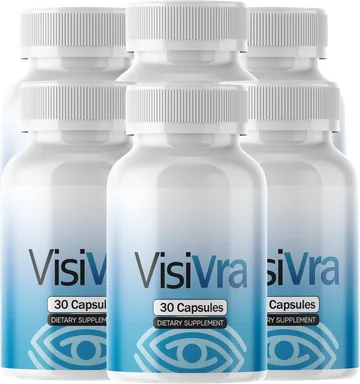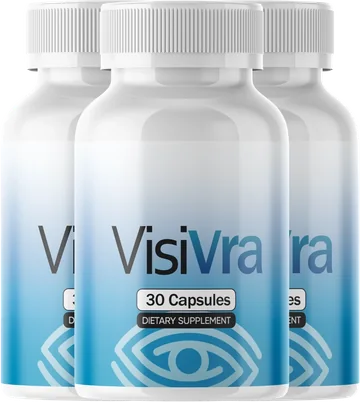
Questions about Visivra Capsules eye strain usually come from people who spend long days at a screen and end them with tired, uncomfortable eyes. This page does not claim that Visivra Capsules does anything for eye strain, and we know of no study of the finished formula on screen use.
What we can offer is what the American Academy of Ophthalmology (AAO) says about screens: why eyes feel worse after hours at a monitor, what the evidence says about blue light, and the simple break habit it recommends. There is a 20-20-20 timer below that you can leave running while you work. We also explain where a supplement sits next to those habits, and when discomfort is a reason to see an eye doctor.
Does Visivra Capsules claim to do anything for eye strain?
No. This site makes no claim that Visivra Capsules does anything for eye strain, dry eyes or screen discomfort, and nothing we saw on the bottle says so either.
The bottle front shows only the name, “30 Capsules”, “Dietary Supplement” and an eye graphic 1. The owner pack says the seller sales page uses “eye comfort”, “visual clarity” and “screen-day support” language 2. Those are seller words. We report them so you know where they come from; we do not repeat them as facts.
If you have been reading Visivra Capsules eye strain promises in an ad, our eye claims guide takes each phrase apart, and our blue light claims page covers the screen-specific wording.
What is digital eye strain?
Digital eye strain, as the AAO describes it, is the discomfort people feel after long screen use, and it is mostly about blinking less, not about anything the screen gives off 3.
The AAO explains it in three plain points:
- People blink less when they look at screens.
- The AAO says blinking less leads to eye strain and dry eyes.
- Eye strain does not cause lasting damage to the eyes.
A separate AAO article puts it the same way: the strain comes from how people use screens, not from anything coming out of them 4. That framing matters, because it points toward habits rather than products.
Does blue light from screens damage your eyes?
The AAO says there is no scientific evidence that blue light from digital devices causes damage to the eye 3. It says discomfort after screen use is most likely digital eye strain.
The AAO also says several studies suggest blue light–blocking glasses do not improve digital eye strain symptoms. In its article on computer glasses, the Academy says it does not recommend special eyewear for computer use, because there is no evidence that light from computer screens damages the eyes 4.
We mention this because some look-alike pages about Visivra say the product does something about blue light. Those pages are not the seller, and the claim has no support in our sources. Visivra Capsules does not block or filter anything, and we make no blue light claim for it.
The 20-20-20 rule, with a timer
The 20-20-20 rule is the AAO's simple screen habit: every 20 minutes, look at something at least 20 feet away for at least 20 seconds 3.
It serves as a reminder to look up and blink, which is the part screens tend to crowd out. The timer below counts down 20 minutes, then prompts a 20-second look into the distance. Leave it open in a tab while you work.
20-20-20 break timer
Every 20 minutes, look at something at least 20 feet away for 20 seconds: the screen-break habit the American Academy of Ophthalmology describes. Runs in this tab only.
Ready when you are
A habit reminder, not a treatment. The timer runs only while this tab is open and stores nothing.
A window, the far end of a hallway or a spot across the room all count as something 20 feet away. If you cannot see that far from your desk, stand up and walk to a spot where you can; the AAO also recommends taking frequent breaks 4.
Screen habits and why the AAO recommends them
Every habit in this table comes from the AAO, and none of them involves buying anything. Each row pairs a habit with the reason the Academy gives.
| Habit | Why (AAO) |
|---|---|
| Follow the 20-20-20 rule | Every 20 minutes, a 20-second look at something 20 feet away breaks up long stretches of close focus |
| Take frequent breaks | Strain comes from how screens are used, so time away from the screen addresses the cause |
| Notice your blinking | People blink less at screens, which leads to eye strain and dry eyes |
| Skip special computer eyewear unless your eye doctor suggests it | The AAO does not recommend special eyewear for computer use; studies suggest blue light–blocking glasses do not improve strain symptoms |
| Do not worry about lasting harm from screens | The AAO says eye strain does not cause lasting damage and there is no evidence screen blue light damages the eye |
| See an eye doctor for new or changing vision | A supplement is not a substitute for an eye exam (NEI) |
The last row comes from the National Eye Institute 5. Our eye exam page covers what to bring and which signs need a prompt visit.
Where does a supplement fit next to these habits?
A supplement does not replace breaks, blinking or an eye exam, and we make no claim that Visivra Capsules adds anything to them. The AAO advice above stands on its own.
People who search Visivra Capsules computer eyes questions often hope for a single fix for long screen days. Our sources do not offer one. They point to how screens are used, and to an eye doctor when something changes. That is less exciting than a capsule, but it is what the evidence in our file supports, and it costs nothing to start today.
If you still want to try Visivra, read the bottle panel first and check whether you belong to a group that should ask a doctor or pharmacist before starting: pregnancy, smoking history, zinc or vitamin A from other products, or regular medicines. Our who should ask first page lists them, and how to use covers the seller's directions.
Why this site makes no Visivra Capsules eye strain claims
We make no Visivra Capsules eye strain claims because we have no evidence to back one, and the FTC says health claims in ads need competent and reliable scientific evidence 6.
The FTC also says consumer experiences are never enough on their own to back a health claim. So even if someone tells you a supplement made long screen days feel easier, that story cannot tell you what a product will do for you. We know of no study of the finished Visivra formula on screens, and the amounts of its named ingredients are not printed on anything we saw.
That leaves a simple position. The AAO habits above have a clear rationale behind them. A supplement does not, at least not for screen discomfort, and any page that tells you otherwise about Visivra Capsules eye strain is making a claim we cannot find support for. Our legit check explains how we look at seller and look-alike wording.
What sources say about the named ingredients and screens
None of our sources tie any of the six named ingredients to screen use or digital eye strain. Here is what they do say, briefly.
- Bilberry: NCCIH says it has not been clearly shown to help any health condition, and the most rigorous studies did not find it effective for night vision in healthy people 7.
- Astaxanthin: Natural Medicines says people use it for eye health but its benefits for any use are not well defined 8.
- Lutein and zeaxanthin: studied with zinc and other nutrients in AREDS2, for people with intermediate AMD, which is a different question from screen discomfort.
- Vitamin A: NIH ODS says it is important for normal vision, and that deficiency is rare in the U.S. 9.
Our evidence page goes through each ingredient in more detail.
When screen discomfort is a reason to see an eye doctor
See an eye doctor if your vision is new or changing, or if you have eye pain, flashes, floaters or straight lines that look wavy. Those are not screen-habit problems.
The AAO says ordinary eye strain does not cause lasting damage, so if discomfort does not settle with breaks, or if it comes with any of the signs above, an exam is the next step rather than another product. NEI says straight lines that look wavy are a warning sign for late AMD and need an eye doctor right away. Bring a list of every supplement you take, including Visivra if you have started it, so the doctor has the full picture. You can find more on related topics in our FAQ.
Frequently asked questions
Will Visivra Capsules stop my eyes feeling tired after work?
We cannot say, and we make no such claim. The AAO says tired eyes after screens are most likely digital eye strain from blinking less, and it recommends the 20-20-20 rule and frequent breaks. See an eye doctor if your vision changes.
Should I take Visivra Capsules because I worry about screen blue light?
Our sources give no basis for that worry. We make no blue light claim for Visivra Capsules, and a capsule does not filter light. The AAO says there is no scientific evidence that blue light from digital devices damages the eye.
Can I use Visivra Capsules instead of computer glasses?
That is the wrong comparison. The AAO does not recommend special eyewear for computer use, and Visivra Capsules is not a replacement for glasses your eye doctor prescribes. If you think you need glasses for screen work, ask at your next eye exam.
Is Visivra Capsules sold as a screen-day supplement?
The owner pack says the seller sales page uses “screen-day support” wording. That is seller language; we do not repeat it as a claim, and nothing on the bottle front says it.
Should office workers try the 20-20-20 rule before Visivra Capsules?
The 20-20-20 rule is free and comes straight from the AAO: every 20 minutes, look at something at least 20 feet away for at least 20 seconds. It is a sensible first step whatever else you decide.
Sources for this page
- Visivra bottle front label (product photos in the owner pack)
- Buyvisivra owner pack (contacts, kits, prices, returns, refund steps, product summary)
- American Academy of Ophthalmology: Should You Be Worried About Blue Light?
- American Academy of Ophthalmology: Are Blue Light-Blocking Glasses Worth It?
- National Eye Institute: Age-Related Macular Degeneration (AMD)
- FTC: Health Products Compliance Guidance
- NCCIH: Bilberry: Usefulness and Safety
- WebMD (Natural Medicines): Astaxanthin overview, uses and safety
- NIH Office of Dietary Supplements: Vitamin A and Carotenoids, Fact Sheet for Consumers
Label words come from photos of the Visivra bottle front. The ingredient names, prices and guarantee details come from the owner pack, which summarises the seller sales page; the sales page itself did not load for us on Nov 25, 2026. No ingredient amounts are printed on anything we saw. Confirm them on your bottle and at checkout. Where sources differ, the printed label wins.