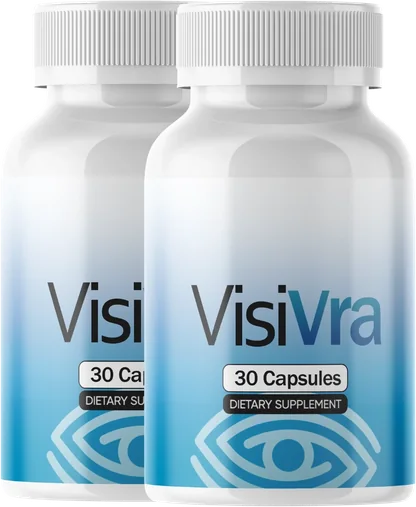
Visivra Capsules macular degeneration questions come up because the bottle shows an eye graphic and the named list includes lutein, zeaxanthin and zinc, three nutrients that appear in a large National Eye Institute study. Visivra Capsules is not intended to diagnose, treat, cure or prevent any disease, and this site makes no claim that it does anything for AMD, cataracts, glaucoma or any other eye condition.
This page sets out what the National Eye Institute says about age-related macular degeneration (AMD), what the AREDS and AREDS2 studies did and did not find, and why anyone with a diagnosed or suspected eye condition should talk to an eye doctor before adding any supplement. Where we have no source, we say so plainly.
Does Visivra Capsules claim to help with any eye condition?
No. This site does not link Visivra Capsules to any outcome for AMD, cataracts, glaucoma, diabetic eye disease or dry eye, and we know of no study of the finished formula for any of them.
The bottle front shows only the name, “30 Capsules”, “Dietary Supplement” and an eye graphic 1. There is no health line on the front photos we have. The owner pack says the seller sales page uses “eye comfort”, “visual clarity” and “screen-day support” language 2. Those are seller words, and none of them names a disease.
FDA does not approve dietary supplements before they are sold, and makers are responsible for their own labels 3. If you have been told you have an eye condition, take the bottle to your eye doctor and ask whether it fits with your care. Our guide to eye claims shows how to read seller wording line by line.
What is age-related macular degeneration?
Age-related macular degeneration (AMD) is an eye disease whose risk rises with age; the National Eye Institute says people 55 and older are more likely to have it 4.
If you searched for Visivra Capsules AMD information, the risk factors are the most useful place to start. NEI names several besides age. If any of these apply to you, it is worth raising AMD with an eye doctor:
- A family history of AMD
- Being Caucasian
- Smoking, now or in the past
NEI says early AMD has no symptoms and that AMD is diagnosed with a dilated eye exam. Later symptoms it describes include loss of central vision and blurry or wavy areas. People at risk should get regular eye exams and ask their doctor how often to come back. Our eye exam page explains what to bring to that visit.
What did the AREDS and AREDS2 studies find?
AREDS and AREDS2 were National Eye Institute studies of specific high-dose formulas. NEI says taking them reduced the risk of progression from intermediate to advanced AMD by about 25 percent 5.
That finding applied to a narrow group: people with intermediate AMD, or advanced AMD in one eye. NEI also reports clear limits on what the formulas did:
- They did not prevent AMD from starting.
- They did not change the risk of cataracts.
- AREDS showed no benefit for early AMD.
- Adding omega-3s had no effect.
AREDS2 replaced beta-carotene with lutein and zeaxanthin, which NEI says gave a small additional benefit. The NIH zinc fact sheet adds that people who have or are developing AMD should talk with their doctor about AREDS-type supplements 6. That is a conversation about a studied formula and your own eyes, not about Visivra.
Is Visivra Capsules an AREDS2 formula?
No. Visivra Capsules is not an AREDS or AREDS2 formula, and we never present it as an alternative to one. The named lists differ, and no amounts are printed on anything we saw 2.
| Ingredient | AREDS2 daily dose studied (NEI) | Visivra Capsules (owner pack list) |
|---|---|---|
| Vitamin C | 500 mg | Not named |
| Vitamin E | 400 IU | Not named |
| Lutein | 10 mg | Named; amount not printed |
| Zeaxanthin | 2 mg | Named; amount not printed |
| Zinc | 80 mg | Named; amount and compound not printed |
| Copper | 2 mg | Not named |
| Bilberry extract | Not part of AREDS2 | Named; amount not printed |
| Astaxanthin | Not part of AREDS2 | Named; amount not printed |
| Vitamin A | Not part of AREDS2 (AREDS used beta-carotene) | Named; form and amount not stated |
Because the amounts are unknown, nobody can say how Visivra compares with the doses NEI studied. Our AREDS comparison goes line by line, and the Supplement Facts guide explains what to look for on the panel of your own bottle.
What we can and cannot say about Visivra Capsules macular degeneration questions
We can tell you what is named on the list and what public sources say about those nutrients; we cannot tell you what Visivra Capsules will do for your eyes. That split runs through every page on this site.
Here is what we can say from our file:
- Six ingredients are named: lutein, zeaxanthin, bilberry extract, astaxanthin, zinc and vitamin A.
- No amount for any of them is printed on anything we saw, and the bottle panel wins over any list.
- The forms are not stated, including which form of vitamin A and which zinc compound.
- No copper, vitamin C or vitamin E is named.
Here is what we cannot say: whether the amounts are close to anything NEI studied, whether the product fits your treatment plan, or whether it is a good idea for you at all. Those are answers only your eye doctor can give, ideally with the bottle in hand. If a page or an ad makes a Visivra Capsules macular degeneration promise, take that as a red flag; our scam warnings explain why.
Cataracts: what do the sources say?
We have no source tying any of the six named ingredients to an outcome for cataracts. Anyone asking about Visivra Capsules cataracts questions should take them to an eye doctor.
Two sources touch on cataracts, and neither is about Visivra. NEI says the AREDS formulas did not change cataract risk 5. The Natural Medicines summary on WebMD says the benefits of lutein for cataracts are not well defined 7.
If you notice new or changing vision, or you have been told you have a cataract, book an eye exam and bring your bottle so the doctor can see the named list. A supplement is not a substitute for that exam.
Glaucoma and diabetic eye disease
We found no source in our file that connects lutein, zeaxanthin, bilberry extract, astaxanthin, zinc or vitamin A to glaucoma. So we say nothing about Visivra Capsules glaucoma use except that it belongs in a conversation with your eye doctor.
The same goes for diabetic eye disease. In both cases a supplement is not a substitute for an eye exam or for the care your doctor has set out 4. Bilberry is often promoted for eye conditions, but NCCIH says it has not been clearly shown to help any health condition 8.
If you take medicine for an eye condition or anything else, ask your pharmacist too. NCCIH notes that “natural” does not mean safe and that supplements can interact with medicines 9. See our list of medicines to ask about.
Warning signs that need an eye doctor now
Straight lines that look wavy are a warning sign for late AMD, and NEI says to see an eye doctor right away if you notice them 4. Do not wait to see whether a supplement makes a difference.
Call an eye doctor's office if you notice any of these:
- Straight lines that look wavy
- Loss of central vision, or blurry or wavy areas
- New or changing vision
- Eye pain
- Flashes or floaters
None of these is something to manage at home with a capsule. When you call, say what you noticed and when it started, and mention every supplement you take.
Who should ask an eye doctor before taking Visivra Capsules?
Anyone with a diagnosed eye condition should ask first, and so should several other groups. The reasons come from what public sources say about the named ingredients, not from any finding about Visivra itself.
- People with AMD or told they are at risk: ask which supplement, if any, fits you.
- Current and former smokers: high-dose beta-carotene supplements raised lung cancer risk, and Visivra does not say which form of vitamin A it uses 10. See our notes for smokers.
- Anyone already taking an AREDS-type eye vitamin, a multivitamin or zinc lozenges: zinc has an adult upper limit that counts all sources.
- Anyone pregnant, trying to conceive or nursing: see our pregnancy page.
- Anyone on a regular medicine.
Our who should ask first page has the full list, with the reason behind each line.
Frequently asked questions
Can Visivra Capsules be used for macular degeneration?
We make no such claim. Visivra Capsules is not intended to diagnose, treat, cure or prevent any disease, including AMD. NEI says the formulas that slowed progression were specific AREDS and AREDS2 doses studied in people with intermediate AMD or advanced AMD in one eye. Ask your eye doctor what fits you.
Does Visivra Capsules contain the same ingredients as AREDS2?
Only partly. It names lutein, zeaxanthin and zinc, which are in AREDS2, but it names no vitamin C, vitamin E or copper and adds bilberry extract, astaxanthin and vitamin A. No amounts are printed on anything we saw, so it is not an AREDS2 formula.
Should I switch from my AMD eye vitamin to Visivra Capsules?
Do not change anything without your eye doctor. Visivra Capsules is not an alternative to an AREDS-type supplement, and taking both could stack zinc from two products. Bring both bottles to your next appointment and ask.
Is Visivra Capsules linked to cataracts or glaucoma in any study?
Not that we know of. We know of no study of the finished Visivra formula for any eye condition. NEI says the AREDS formulas did not change cataract risk, and we have no source tying the named ingredients to glaucoma. Your eye doctor is the right person to ask.
What should my eye doctor know about Visivra Capsules if I have AMD?
Bring the bottle and a list of everything else you take. Say that the six named ingredients are lutein, zeaxanthin, bilberry extract, astaxanthin, zinc and vitamin A, that amounts were not printed on anything we saw, and that the vitamin A form is not stated.
Sources for this page
- Visivra bottle front label (product photos in the owner pack)
- Buyvisivra owner pack (contacts, kits, prices, returns, refund steps, product summary)
- FDA: Questions and Answers on Dietary Supplements
- National Eye Institute: Age-Related Macular Degeneration (AMD)
- National Eye Institute: About AREDS and AREDS2
- NIH Office of Dietary Supplements: Zinc, Fact Sheet for Consumers
- WebMD (Natural Medicines): Lutein overview, uses and safety
- NCCIH: Bilberry: Usefulness and Safety
- NCCIH: Safe Use of Complementary Health Products and Practices
- NIH Office of Dietary Supplements: Vitamin A and Carotenoids, Fact Sheet for Consumers
Label words come from photos of the Visivra bottle front. The ingredient names, prices and guarantee details come from the owner pack, which summarises the seller sales page; the sales page itself did not load for us on Nov 25, 2026. No ingredient amounts are printed on anything we saw. Confirm them on your bottle and at checkout. Where sources differ, the printed label wins.