Visivra Capsules blue light claims do not appear on the bottle: the front we have seen prints no claim line of any kind 1. The blue light wording comes from third-party look-alike pages, which say the product protects against damage from screens.
This page sets that wording against what the American Academy of Ophthalmology says: that there is no scientific evidence screen light damages the eye, that screen discomfort is usually digital eye strain from blinking less, and that breaks work better than special products. We also explain where the seller's own "screen-day support" phrase fits and what we cannot say about it.
Is Visivra Capsules sold as a blue light blocker?
No such claim is printed on the Visivra Capsules bottle front we have seen, and this site makes no blue light claim for it either 1.
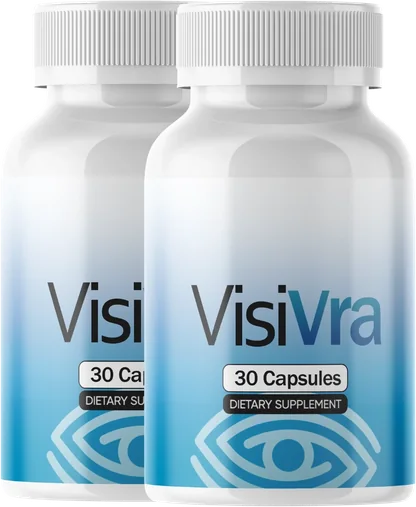
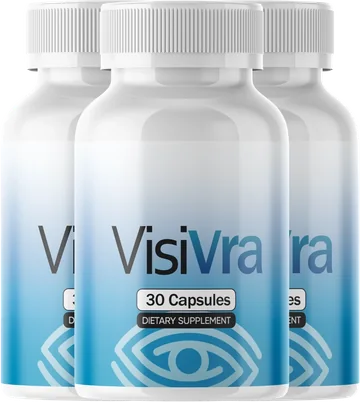
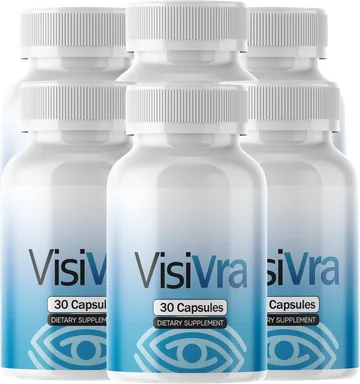
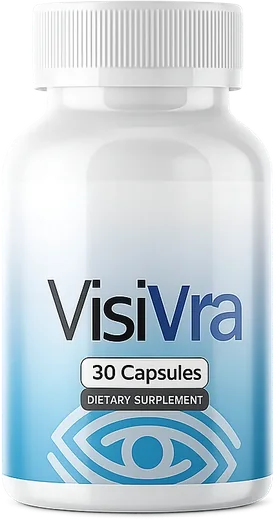
The front shows only the name, "30 Capsules", "Dietary Supplement" and an eye graphic. There is no asterisk, no claim line and no FDA statement. We have not seen the back label.
A capsule you swallow is not a screen filter or a pair of lenses, and nothing we have read describes it as one. If you want to know what is printed, our bottle label page lists every element on the front and what to look for on the back.
Where does the Visivra Capsules blue light wording come from?
The Visivra Capsules blue light wording we found comes from third-party look-alike pages, not from the seller's bottle or the owner pack summary of the sales page.
These pages call themselves official while sending buyers through tracking links. They are not the seller. Along with the blue light line, they share other patterns:
- star ratings and review counts with no source behind them;
- "FDA Approved Facility" wording;
- large percent-off banners and a much higher "regular" figure;
- results timelines given in weeks.
We do not name or link these pages and do not repeat their numbers. Our scam warnings page and where-to-buy guide explain how to reach the seller's own checkout instead.
What does the American Academy of Ophthalmology say about blue light?
The American Academy of Ophthalmology says there is no scientific evidence that blue light from digital devices causes damage to the eye 2.
The Academy explains that the discomfort people feel after long screen sessions is most likely digital eye strain. The Academy says people blink less when they look at screens, and that this leads to eye strain and dry eyes. The Academy adds that eye strain does not cause lasting damage.
That is a clear answer to the fear behind most blue light marketing. The concern that screens are slowly harming your eyes is not what the eye doctors' professional body says the evidence shows.
Claim patterns compared with what AAO says
Each claim pattern below appears in blue light marketing generally or on Visivra look-alike pages; the right-hand column gives the Academy's position.
| Claim pattern | What AAO says |
|---|---|
| A capsule that shields you from screen "damage" | No scientific evidence that blue light from devices damages the eye |
| Screens are harming your eyes over time | Eye strain does not cause lasting damage |
| Tired eyes after screens are a blue light problem | Most likely digital eye strain from blinking less |
| You need special screen eyewear | The Academy does not recommend special eyewear for computer use 3 |
| Blue light glasses fix screen discomfort | Several studies suggest these glasses make no difference to eye strain symptoms |
| A product is the answer to screen days | Take frequent breaks; use the 20-20-20 rule |
None of these rows is a finding about Visivra Capsules. They show the gap between marketing patterns and the Academy's published view.
What about the seller's "screen-day support" wording?
The owner pack says the seller sales page uses "screen-day support" language, alongside "eye comfort" and "visual clarity" 4. These are seller words; we do not repeat them as claims.
The phrase does not mention blue light, according to the pack summary. It is aimed at people who spend long days at screens. We could not open the sales page when we tried on Nov 25, 2026, so we rely on the pack's summary for its wording.
Measured against the Academy's view, the useful steps for screen days are about how you use screens, not what you swallow 3. Our seller claims page takes each phrase in turn, with what public sources say about the named ingredients.
Do any named Visivra ingredients have screen-use evidence?
None of the public sources we cite studied any of the six named Visivra ingredients for screen use, and none studied Visivra Capsules itself.
Here is what those sources do say about the ingredients most often linked to eyes in marketing:
- Bilberry. NCCIH says it has not been clearly shown to help any health condition, and the most rigorous studies did not find it effective for night vision in healthy people 5.
- Astaxanthin. Natural Medicines, via WebMD, says its benefits for any use are not well defined 6.
- Lutein and zeaxanthin. NEI's AREDS2 study used them at set doses with other nutrients in people with specific AMD stages 7. That was not a screen study.
The amounts in Visivra are not printed on anything we saw, so even these findings cannot be carried over to the capsule. Our ingredients page covers all six.
What does AAO say about blue light glasses and screen eyewear?
The American Academy of Ophthalmology does not recommend special eyewear for computer use, because it finds no scientific evidence that light from computer screens damages the eyes 3.
The Academy says eye strain comes from how people use screens, chiefly blinking less, and not from anything coming out of the screen. That is why its advice centres on breaks rather than on products, whether the product is a pair of tinted lenses or a capsule.
This matters for anyone weighing a purchase. If the people who examine eyes for a living do not recommend screen glasses, a supplement marketed with blue light wording deserves at least as much caution. We make no blue light claim for Visivra Capsules, and we suggest you base any decision on what the bottle prints and on your eye doctor's advice.
What helps with screen time, according to AAO?
The Academy's main advice for Visivra Capsules screen time questions, or any screen-heavy day, is the 20-20-20 rule and frequent breaks 2.
- Every 20 minutes, look at something at least 20 feet away.
- Keep looking at it for at least 20 seconds.
- Take frequent longer breaks away from the screen.
- Remember to blink; the Academy links screen discomfort to blinking less.
These steps cost nothing and come straight from the eye doctors' academy. Our screen-time page includes a break timer built on the 20-20-20 tip, so you can try it during your next long session.
Is a blue light eye supplement a substitute for an eye exam?
No. A blue light eye supplement, Visivra Capsules included, is not a substitute for an eye exam, glasses or a doctor's advice, and no source we cite says otherwise.
Screen discomfort that goes away with breaks is one thing. Other symptoms need an eye doctor, and the National Eye Institute lists several warning signs 8:
- loss of central vision, or blurry or wavy areas;
- straight lines that look wavy, which NEI says calls for an eye doctor right away;
- new or changing vision, eye pain, flashes or floaters.
NEI also says people at higher risk of AMD, including those 55 and older, should get regular eye exams and ask their doctor how often. Our eye exam guide covers what a dilated exam involves.
How do I spot a misleading blue light ad?
A blue light ad is a warning sign when it promises protection, gives a timeline or pairs the claim with pressure tactics; the FTC says health claims need competent and reliable scientific evidence 9.
Look for these markers:
- a promise of protection from screen damage, which the Academy says is not supported by evidence;
- a week-by-week timeline of what you will notice;
- dramatic testimonials with no note of what is typical, which the FTC says are likely deceptive;
- "FDA approved" wording, which does not apply to supplements before sale 10.
If you see two or more, close the page. Check what the bottle actually prints and order only through a checkout you trust. Our legitimacy checks list what we could confirm about the seller.
Frequently asked questions
Is Visivra Capsules a screen filter for blue light?
No, and it is not described that way on the bottle front we have seen. A capsule is not a filter. The American Academy of Ophthalmology says there is no scientific evidence that light from device screens damages the eye.
Why do some pages tie Visivra Capsules to blue light damage from screens?
That wording comes from third-party look-alike pages, not from the bottle. We do not repeat it. The American Academy of Ophthalmology says there is no evidence that blue light from devices causes eye damage.
Should I take Visivra Capsules instead of wearing blue light glasses?
Neither is recommended by the Academy for screen use. It does not recommend special eyewear for computers and says several studies suggest blue light glasses make no difference to eye strain symptoms. It recommends breaks and the 20-20-20 rule.
Is the Visivra Capsules screen-day support wording about blue light?
Not according to the owner pack summary, which lists "screen-day support" with "eye comfort" and "visual clarity" as seller wording. We do not repeat these phrases as claims, and the bottle front prints none of them.
When should a Visivra Capsules buyer see an eye doctor about screen discomfort?
If discomfort does not settle with breaks, or you notice wavy lines, blurry areas, eye pain, flashes, floaters or any change in vision, see an eye doctor. A supplement is not a substitute for an eye exam.
Sources for this page
- Visivra bottle front label (product photos in the owner pack)
- American Academy of Ophthalmology: Should You Be Worried About Blue Light?
- American Academy of Ophthalmology: Are Blue Light-Blocking Glasses Worth It?
- Buyvisivra owner pack (contacts, kits, prices, returns, refund steps, product summary)
- NCCIH: Bilberry: Usefulness and Safety
- WebMD (Natural Medicines): Astaxanthin overview, uses and safety
- National Eye Institute: About AREDS and AREDS2
- National Eye Institute: Age-Related Macular Degeneration (AMD)
- FTC: Health Products Compliance Guidance
- FDA: Questions and Answers on Dietary Supplements
Label words come from photos of the Visivra bottle front. The ingredient names, prices and guarantee details come from the owner pack, which summarises the seller sales page; the sales page itself did not load for us on Nov 25, 2026. No ingredient amounts are printed on anything we saw. Confirm them on your bottle and at checkout. Where sources differ, the printed label wins.