Visivra Capsules ingredients, as named in the owner pack's list, are lutein, zeaxanthin, bilberry extract, astaxanthin, zinc and vitamin A. No amount for any of them is printed on anything we saw, and the list itself says the printed panel on your bottle wins.
This page sets out what is known and unknown about each named ingredient, what public health sources say about it in plain words, and who should ask a doctor or pharmacist first. We do not estimate amounts, and nothing here is a claim about what the capsules do.
 Matches the directionsSeller copy says one capsule a day with a meal; follow your bottle.
 No lab namedNo lab, method or result is shown. Ask the order desk for the certificate of analysis for your lot.
 Cannot be checkedOther ingredients are not listed on anything we saw, so we cannot tell what is in the capsule besides the six names.
 Origin claimNo maker or facility is named. We could not check where it is made.
Badge images supplied by the owner and used on the seller side. We show them with what we could check against the ingredient list; they describe seller claims, not any health effect.
What is in Visivra Capsules?
Six Visivra Capsules ingredients are named: lutein, zeaxanthin, bilberry extract, astaxanthin, zinc and vitamin A. That is the whole list we have, and it carries no amounts.
The list comes from the owner pack, which summarises the seller sales page 1. Its seventh line reads "Bottle panel wins — do not invent milligrams", meaning the Supplement Facts panel printed on your bottle overrides this list. We have not seen that panel, so our Supplement Facts guide explains what to read on yours.
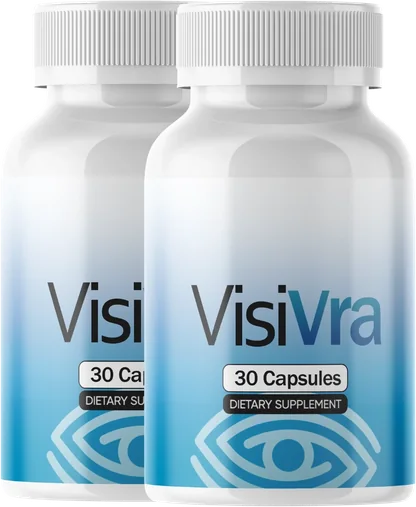
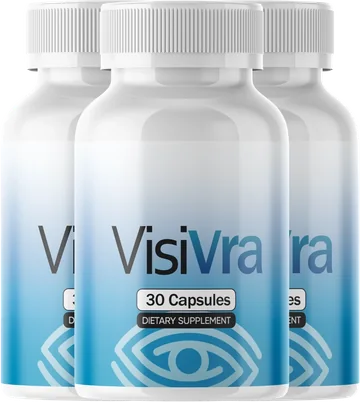
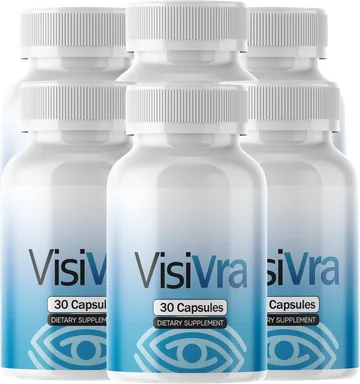
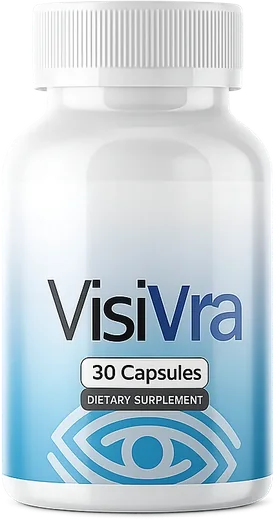
The bottle front shows only the name, "30 Capsules", "DIETARY SUPPLEMENT" and an eye graphic 2. It does not list ingredients. Each capsule is an oral dietary supplement, sold 30 to a bottle.
Visivra formula at a glance
The Visivra formula is a list of names without amounts. The table pairs each name with what public sources say about it, in one line, and links to a full page.
| Ingredient | Amount | What public sources say, in one line | Full page |
|---|---|---|---|
| Lutein | Not printed on anything we saw | A carotenoid found in eggs and leafy greens; AREDS2 studied it with zeaxanthin in a combination | Lutein |
| Zeaxanthin | Not printed | Studied with lutein in AREDS2; the body does not turn it into vitamin A | Zeaxanthin |
| Bilberry extract | Not printed | Promoted for vision, but not clearly shown to help any health condition | Bilberry |
| Astaxanthin | Not printed | A carotenoid from seafood or red algae; benefits for any use not well defined | Astaxanthin |
| Zinc | Not printed | Adult upper limit counts all sources combined | Zinc |
| Vitamin A | Not printed | Needed for normal vision; too much preformed vitamin A can harm, especially in pregnancy | Vitamin A |
The one-line summaries come from NEI, NIH ODS, NCCIH and Natural Medicines, and each full page carries the citations. They describe each ingredient in general, not Visivra Capsules.
Why are there no amounts on this page?
Because no amount is printed on anything we saw. We will not guess milligrams, micrograms or units for any Visivra Capsules ingredient.
Amounts matter for several of these ingredients. NIH ODS sets an adult upper limit for zinc of 40 mg a day from all sources, including foods, drinks, supplements and medicines 3, and an upper limit of 3,000 mcg RAE a day for preformed vitamin A 4. Those limits are for your total intake, not for one product.
Until you can read the panel, nobody can say whether a daily capsule sits well under those limits or close to them. If you also take a multivitamin, an eye vitamin or zinc lozenges, add them up with a pharmacist once you have the panel. Our safety overview lists who should ask first.
Which forms are used, and what else is in the capsule?
The forms of the Visivra Capsules ingredients are not stated. We do not know which vitamin A, which zinc compound, which part of the bilberry plant or which astaxanthin source the capsules use.
- Vitamin A: supplements may use preformed vitamin A (retinyl acetate or palmitate), beta-carotene, or both 4. Which one Visivra uses is unknown, and it matters for smokers and in pregnancy.
- Zinc: the compound is not named.
- Bilberry: not stated whether it is fruit or leaf extract, or its standardisation.
- Astaxanthin: the source is not stated.
- Other ingredients: capsule shell, fillers, flow agents, capsule material, allergen statement and maker are not listed anywhere we saw.
No copper is named. No caffeine or other stimulant is named either. A "No Needless Fillers" badge appears in seller images, but it cannot be checked because the other ingredients are not listed; see what the seller badges say.
Explore the Visivra supplement ingredients one by one
The explorer below lets you tap each named ingredient to see its amount status, what sources say and who should ask first. It uses the same facts as this page.
Ingredient explorer
Tap any named ingredient: what is printed about it, what public sources say, and who should ask first.
Every Visivra supplement ingredient in the explorer shows "not printed" for its amount, because that is what we found. The explorer does not score or rank anything. If your bottle's panel shows amounts, those printed numbers are the ones to bring to your pharmacist.
The three carotenoids: lutein, zeaxanthin and astaxanthin
Lutein, zeaxanthin and astaxanthin are carotenoids, plant and algae pigments that the body does not turn into vitamin A. Beyond that, the evidence for each is different.
Lutein is found in eggs and vegetables such as kale, spinach and bell peppers, and most supplements make it from marigold flowers 5. AREDS2 studied lutein 10 mg with zeaxanthin 2 mg as part of a combination for people with intermediate AMD or advanced AMD in one eye 6. Lutein and zeaxanthin are not converted to vitamin A 7.
Astaxanthin comes from salmon, crab and shrimp in food, and usually from a red alga in supplements. Natural Medicines says its benefits for any use are not well defined 8. Sources suggest taking lutein and astaxanthin with a meal that contains fat.
Bilberry, zinc and vitamin A in plain words
Bilberry has weak evidence, while zinc and vitamin A are essential nutrients with upper limits. That makes the missing amounts more important for the last two.
NCCIH says bilberry is promoted for vision and eye conditions but has not been clearly shown to help any health condition 9. Fruit extracts up to 160 mg a day for up to six months have been used safely in research, while leaves may be unsafe at high doses or with long-term use.
Zinc taken in excess for a long time can lower immunity, HDL cholesterol and copper levels, and it interacts with some antibiotics. NIH ODS says vitamin A is important for normal vision and the immune system, and that too much preformed vitamin A in pregnancy can cause birth defects, and high-dose beta-carotene raises lung cancer risk in people who smoke or used to smoke. See notes for smokers and pregnancy questions.
How are the ingredients meant to be taken?
Seller copy gives one capsule a day with a meal that has some fat; follow the directions on your bottle. The owner pack itself simply says to follow the label 1.
The "some fat" wording fits what sources say about several of the named ingredients. Natural Medicines suggests taking lutein and astaxanthin with a meal that contains fat, and NIH ODS describes vitamin A as fat-soluble. That is a note on wording, not a sign that a fatty meal changes anything about Visivra Capsules.
Several practical details are not stated anywhere we saw:
- What to do after a missed capsule.
- How to store the bottle and at what temperature.
- A maximum daily amount.
- Capsule size and the best time of day.
Ask your pharmacist or the order desk about any of these, and see the dosage page for the one-a-day supply math.
What does the seller say the ingredients are for?
The seller sales page uses "eye comfort", "visual clarity" and "screen-day support" language, according to the owner pack. Those are seller words, and this site does not repeat them as claims.
Public sources paint a narrower picture. NCCIH says bilberry has not been clearly shown to help any condition, Natural Medicines says the benefits of astaxanthin are not well defined, and NEI says AREDS-type formulas help only specific stages of AMD and do not prevent AMD or cataracts. The American Academy of Ophthalmology says screen discomfort is most likely digital eye strain from blinking less, and recommends breaks rather than special products 10.
We report that gap rather than resolving it. Our guide to the seller's claims goes phrase by phrase.
Is this an AREDS formula?
No. Visivra Capsules is not an AREDS or AREDS2 formula, and nothing on this site presents it as one or as an alternative.
AREDS2 used vitamin C, vitamin E, lutein, zeaxanthin, zinc and copper at set daily doses 6. Visivra names lutein, zeaxanthin and zinc, but also bilberry, astaxanthin and vitamin A, and names no vitamin C, vitamin E or copper. Its amounts are unknown, so no comparison of doses is possible.
Anyone with AMD, or told they are at risk, should ask their eye doctor which supplement, if any, fits them. Our AREDS2 comparison lays out the differences side by side.
Who should ask before taking Visivra Capsules ingredients?
Ask a doctor or pharmacist first if you are pregnant, trying to conceive or nursing, smoke or used to smoke, take regular medicine, or already use zinc or vitamin A products.
Medicines worth naming include acitretin, bexarotene and orlistat, which interact with vitamin A, and quinolone or tetracycline antibiotics, penicillamine and thiazide diuretics, which interact with zinc. NCCIH reminds readers that "natural" does not mean safe 11. Our medicines page has the detail.
Frequently asked questions
Does Visivra Capsules list how much lutein, zinc or vitamin A each capsule has?
No amounts are printed on anything we saw, including the ingredient list in the owner pack. Read the Supplement Facts panel on your own bottle; it overrides the list on this page.
What other ingredients are in the Visivra Capsules shell?
We do not know. The capsule shell, fillers, flow agents, capsule material and any allergen statement are not listed anywhere we saw. Check your bottle panel or ask the order desk on +1 (302) 200-3480.
Does Visivra Capsules contain copper or caffeine?
Neither is named. The list does not name copper, caffeine or any other stimulant. Only the panel on your bottle can confirm the full contents.
Which form of vitamin A is in Visivra Capsules?
The form is not stated. It could be preformed vitamin A, beta-carotene or a mix, and that matters for smokers and in pregnancy. Ask your pharmacist to read the panel with you.
Why does the Visivra Capsules ingredient list say the bottle panel wins?
The owner pack's list ends with the line "Bottle panel wins — do not invent milligrams". It means the printed Supplement Facts panel on your bottle is the authority if it differs from the named list.
Sources for this page
- Buyvisivra owner pack (contacts, kits, prices, returns, refund steps, product summary)
- Visivra bottle front label (product photos in the owner pack)
- NIH Office of Dietary Supplements: Zinc, Fact Sheet for Consumers
- NIH Office of Dietary Supplements: Vitamin A and Carotenoids, Fact Sheet for Consumers
- WebMD (Natural Medicines): Lutein overview, uses and safety
- National Eye Institute: About AREDS and AREDS2
- NIH Office of Dietary Supplements: Vitamin A and Carotenoids, Fact Sheet for Health Professionals
- WebMD (Natural Medicines): Astaxanthin overview, uses and safety
- NCCIH: Bilberry: Usefulness and Safety
- American Academy of Ophthalmology: Should You Be Worried About Blue Light?
- NCCIH: Safe Use of Complementary Health Products and Practices
Label words come from photos of the Visivra bottle front. The ingredient names, prices and guarantee details come from the owner pack, which summarises the seller sales page; the sales page itself did not load for us on Nov 25, 2026. No ingredient amounts are printed on anything we saw. Confirm them on your bottle and at checkout. Where sources differ, the printed label wins.