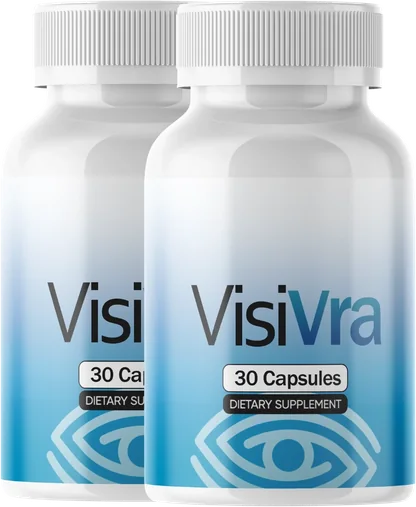
Does blue light damage eyes? The American Academy of Ophthalmology says there is no scientific evidence that blue light from digital devices causes damage to the eye 1. The discomfort many people feel after a long day at a screen has a different, more ordinary explanation.
Supplement and eyewear ads often say otherwise, and Visivra Capsules is sold with screen-day wording on the seller page, according to the owner pack. This post sets out what the Academy says, what that means for claims you may see, and what to do about tired eyes. We do not claim that Visivra Capsules blocks or filters anything.
Reviewed by Dr. Aimee Duffy, MD, Physician. Name and designation supplied by the owner; not independently verified.
Does blue light from screens damage your eyes?
No, according to the American Academy of Ophthalmology, which says there is no scientific evidence that blue light from digital devices causes damage to the eye 1. The Academy does not treat screens as a cause of lasting harm.
The Academy makes the same point about computer screens in general: it says there is no scientific evidence that light from computer screens damages the eyes 2. Questions about other light sources or other conditions are for an eye doctor, and this page covers only what the Academy says about screens.
Why do eyes feel tired after screens, then?
The likely cause is digital eye strain, which the Academy links to blinking less while looking at a screen. Less blinking leads to eye strain and dry eyes, according to the AAO 1.
The Academy also says that eye strain does not cause lasting damage, and that the strain comes from how people use screens, not from anything coming out of the screens 2. That is why the Academy advice is about habits.
- Take frequent breaks from the screen.
- Use the 20-20-20 rule: every 20 minutes, look at something at least 20 feet away for at least 20 seconds 1.
- Notice whether you are blinking less than usual while you read or work.
These steps cost nothing and need no purchase. If you wear glasses or contact lenses, keep wearing them as prescribed, and ask your eye doctor whether your prescription is current, because a wrong prescription is another reason eyes feel tired. Our screen time page explains these habits in more detail.
Do blue light glasses or supplements fix the problem?
The Academy does not recommend special eyewear for computer use, and it says several studies suggest blue light-blocking glasses do not improve digital eye strain symptoms 1 2. The claim that they help rests on a cause the Academy does not support.
Supplements are a separate question, and the evidence we can cite does not link any named Visivra Capsules ingredient to screen strain. The NCCIH says bilberry has been used and promoted for vision and eye conditions but has not been clearly shown to help any health condition, and that night-vision studies conflict 3. WebMD says astaxanthin is used by people for eye health, but its benefits for any use are not well defined 4.
We therefore make no claim that Visivra Capsules affects screen discomfort. Only the seller's own wording says so, and it is unverified.
How do you judge a blue light claim in an ad?
Treat a blue light claim as a marketing statement until the seller shows evidence for it, and compare the claim with what the Academy says. The FTC says health claims in ads need competent and reliable scientific evidence 5.
| Phrase you may see | What the AAO or the FTC says | Question to ask |
|---|---|---|
| Screens damage your eyes | The AAO says there is no scientific evidence of this | What study does the seller cite? |
| Special glasses help screen strain | Studies suggest they do not improve strain symptoms | Is there evidence beyond a testimonial? |
| Screen-day support | Seller wording, per the owner pack | What does it mean in plain terms? |
| Personal stories | The FTC says consumer experiences are never enough to back a claim | Who says it was typical? |
Our blue light claims page collects the wording we found, and the eye claims page covers the rest.
When should you see an eye doctor instead?
See an eye doctor if your vision changes, your eyes hurt, or discomfort does not go away after breaks. Screen discomfort is common, but new or changing vision is a reason for an exam, not for a web search.
The National Eye Institute says that straight lines looking wavy is a warning sign for late age-related macular degeneration, and that you should see an eye doctor right away 6. A supplement is not a substitute for an exam, and Visivra Capsules is not intended to diagnose, treat, cure or prevent any disease.
If you want to see how the product is sold, Check the Visivra Capsules order page after you have read the label questions on our bottle label page.
Frequently asked questions
Does Visivra Capsules make any claim about blue light from screens?
We make no claim about it. Nothing we saw on the bottle front says so, and the Academy says there is no scientific evidence that screen blue light damages the eye. Any such wording would be seller copy, which we cannot verify.
Can Visivra Capsules stand in for blue light glasses or screen breaks?
No. The Academy recommends breaks such as the 20-20-20 rule and does not recommend special eyewear for computer use. We do not suggest that Visivra Capsules replaces any habit, glasses, an exam or advice from an eye doctor.
Why does the seller page describe Visivra Capsules as screen-day support?
The owner pack says the seller page uses eye comfort, visual clarity and screen-day support wording. These are the seller's words, and we cannot confirm them. Sources we cite link screen discomfort to blinking less, not to any ingredient.
Sources for this page
- American Academy of Ophthalmology: Should You Be Worried About Blue Light?
- American Academy of Ophthalmology: Are Blue Light-Blocking Glasses Worth It?
- NCCIH: Bilberry: Usefulness and Safety
- WebMD (Natural Medicines): Astaxanthin overview, uses and safety
- FTC: Health Products Compliance Guidance
- National Eye Institute: Age-Related Macular Degeneration (AMD)
Label words come from photos of the Visivra bottle front. The ingredient names, prices and guarantee details come from the owner pack, which summarises the seller sales page; the sales page itself did not load for us on Nov 25, 2026. No ingredient amounts are printed on anything we saw. Confirm them on your bottle and at checkout. Where sources differ, the printed label wins.