The 20-20-20 rule explained in one sentence: every 20 minutes, look at something at least 20 feet away for at least 20 seconds. The American Academy of Ophthalmology gives this as its tip for screen discomfort, which it says is most likely digital eye strain 1.
It costs nothing and needs no equipment, which is why we put it ahead of any product. Visivra Capsules is a dietary supplement, and we make no claim that it replaces a break or any other habit. This post covers what the rule is, why the Academy suggests it, how to fit it into a real day and when a break is not enough.
Reviewed by Dr. Aimee Duffy, MD, Physician. Name and designation supplied by the owner; not independently verified.
What is the 20-20-20 rule?
The 20-20-20 rule is a screen-break habit: every 20 minutes, look at something at least 20 feet away for at least 20 seconds. The American Academy of Ophthalmology lists it among its suggestions for people who feel discomfort after screens 1.
| Number | What it stands for | In everyday terms |
|---|---|---|
| 20 minutes | How often to pause | Roughly the length of a short task or a few emails |
| 20 feet | The minimum distance to look | Across a room, or out of a window |
| 20 seconds | The minimum time to look away | A slow count to twenty |
The word at least matters: the Academy states the distance and the time as minimums, so longer or further is fine. The rule has no equipment, no cost and no age limit, and it asks nothing of you except to look away from the screen on a schedule. It is a prompt to pause, not a test you can pass or fail, so a missed break is simply a reason to take the next one.
Why does the Academy suggest it?
The Academy suggests it because people blink less while looking at a screen, and it says that causes eye strain and dry eyes 1. A pause lets you look away from the screen and gives you a moment to notice your own blinking.
The Academy also says that eye strain does not cause lasting damage, and that screen discomfort comes from how people use screens, not from anything coming from the screens 2. That is why its advice is to take frequent breaks and not to buy special eyewear. We cannot say how well the rule works for any one person, because the Academy tip is a recommendation and not a promise of any outcome.
How do you fit the 20-20-20 rule into a work day?
Tie the break to something you already do, so you do not have to remember it. A repeating timer on a phone or computer is the simplest way, and a calendar reminder works as well.
- Set a repeating reminder for every 20 minutes during screen work.
- When it sounds, pick a spot at least 20 feet away, such as a far wall or a window.
- Look at it for at least 20 seconds, and let yourself blink a few times.
- Stand up, stretch or get water on the longer breaks, since the Academy advises frequent breaks in general 2.
Our screen time page has more on arranging a day around the screen, and it links to a break timer. If a reminder every 20 minutes interrupts your work too often, shorten the pause but keep it regular, and ask an eye doctor what suits you.
Does a supplement replace the 20-20-20 rule?
No. A supplement does not replace a break, and we make no claim that Visivra Capsules does. The only screen advice we can cite is from the Academy, and it is about habits.
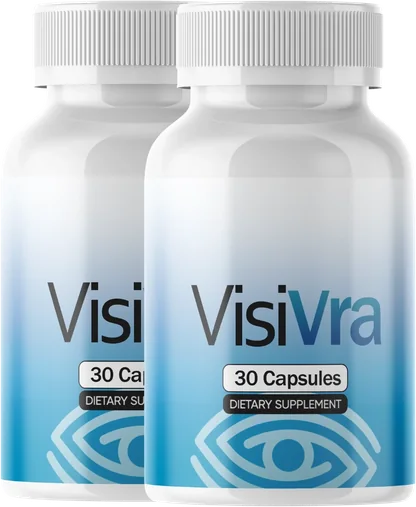
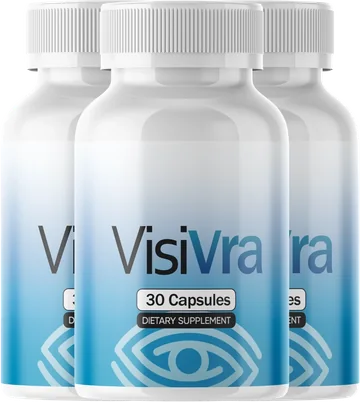
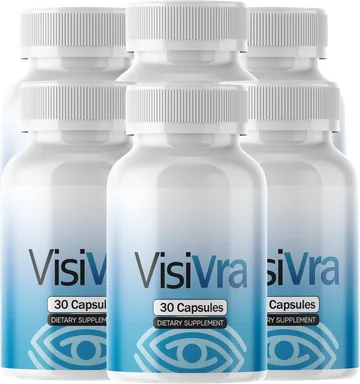
The owner pack says the seller page uses eye comfort, visual clarity and screen-day support wording for Visivra Capsules 3. Those are the seller's words, and we cannot verify them. The bottle front photos show only the name, the count of 30 capsules, the words Dietary Supplement and an eye graphic. If you are weighing a purchase, our does it work page explains why we cannot say it does, and See how Visivra Capsules is sold only after you have read it.
The FTC says health claims in ads need competent and reliable scientific evidence, and that consumer experiences are never enough on their own 4. Hold any screen-day promise to that standard.
When is a break not enough?
A break is not enough when your vision changes, your eyes hurt, or the discomfort stays after you rest. Those are reasons to book an eye exam, not to keep adjusting your habits.
- New or changing vision, or eye pain, need an eye doctor.
- Straight lines that look wavy are a warning sign for late age-related macular degeneration, and the National Eye Institute says to see an eye doctor right away 5.
- If you are over 55 or have risk factors, ask your eye doctor how often to be examined.
Visivra Capsules is not intended to diagnose, treat, cure or prevent any disease, and a supplement is not a substitute for an exam. See our eye exam page for what to expect at an appointment.
Frequently asked questions
Can Visivra Capsules replace the 20-20-20 rule?
No. We make no claim that Visivra Capsules replaces a screen break, glasses, an eye exam or advice from an eye doctor. The Academy tip is a habit: every 20 minutes, look at least 20 feet away for at least 20 seconds.
Should I take Visivra Capsules before a long screen session?
We cannot advise on timing. Seller copy describes one capsule a day with a meal that has some fat, and the owner pack says to follow your bottle label. Ask your pharmacist or doctor about any questions on taking it.
What do seller pages say about Visivra Capsules and screen days?
The owner pack says the seller page uses screen-day support, eye comfort and visual clarity wording. Those are seller claims that we do not repeat as fact and cannot verify. The Academy ties screen discomfort to blinking less.
Sources for this page
- American Academy of Ophthalmology: Should You Be Worried About Blue Light?
- American Academy of Ophthalmology: Are Blue Light-Blocking Glasses Worth It?
- Buyvisivra owner pack (contacts, kits, prices, returns, refund steps, product summary)
- FTC: Health Products Compliance Guidance
- National Eye Institute: Age-Related Macular Degeneration (AMD)
Label words come from photos of the Visivra bottle front. The ingredient names, prices and guarantee details come from the owner pack, which summarises the seller sales page; the sales page itself did not load for us on Nov 25, 2026. No ingredient amounts are printed on anything we saw. Confirm them on your bottle and at checkout. Where sources differ, the printed label wins.